
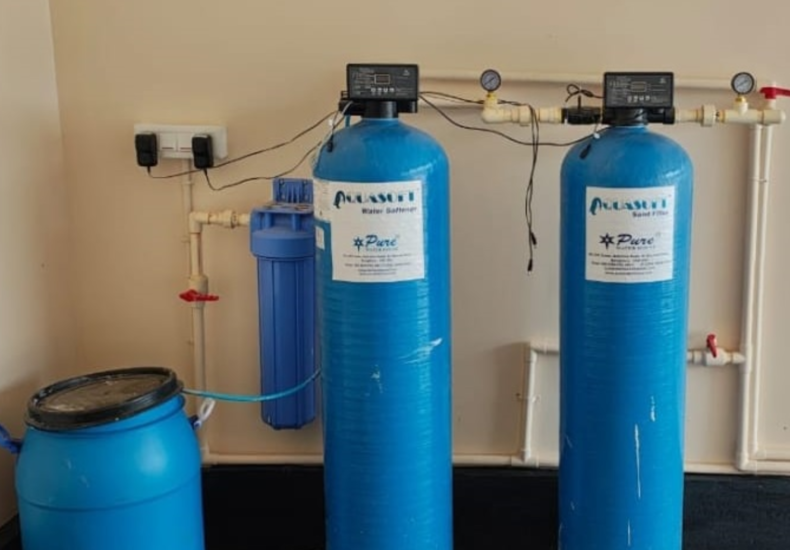
When Your Water Smells Off: Understanding Odors, Stains, and Modern Filtration Solutions
There’s something unsettling about turning on the tap and catching a smell you didn’t expect.
Water is supposed to feel neutral — clean, quiet, dependable. So when it carries a sulfur-like odor, leaves orange stains in the sink, or sparks questions about unseen chemicals, it’s hard to ignore. It lingers in the back of your mind while you wash dishes or step into the shower.
The good news? Most water issues have explanations. And more importantly, they have solutions.
The Mystery of Unpleasant Odors
Let’s start with one of the most common complaints: smelly water.
If your tap water smells like rotten eggs, hydrogen sulfide gas is often the culprit. This can occur naturally in well water or develop when certain bacteria interact with sulfur compounds. Sometimes, even a water heater’s anode rod can contribute to that unmistakable scent.
While unpleasant, sulfur odors are typically not harmful at low levels. Still, no one enjoys brushing their teeth with water that smells like a swamp.
Addressing the issue usually involves aeration systems, oxidizing filters, or specialized carbon filtration. The exact fix depends on testing results. In some cases, adjusting water heater components resolves the problem entirely.
The key is identifying the source rather than masking the smell.
When Stains Tell a Story
Orange streaks in sinks. Brownish discoloration in toilets. Laundry that looks slightly dingy even after washing.
These signs often point to dissolved iron in your water supply. Iron isn’t dangerous in small amounts, but it can be frustrating — especially when it stains fixtures and fabrics.
This is where targeted iron & rust removal systems come into play.
Depending on concentration levels, solutions may include oxidizing filters, greensand filtration, or multi-stage treatment systems that convert dissolved iron into a removable solid form. Once filtered out, staining decreases significantly, and fixtures regain their original appearance.
Many homeowners are surprised at how quickly visible improvements occur after iron treatment. Faucets shine again. Clothing retains its brightness.
And honestly, it just feels good not having to scrub constantly.
The Growing Concern Over Emerging Contaminants
In recent years, attention has shifted toward contaminants that aren’t visible or detectable by taste alone. One of the most discussed categories is PFAS — a group of synthetic chemicals sometimes referred to as “forever chemicals” due to their persistence in the environment.
Unlike sulfur odors or iron stains, PFAS don’t announce themselves. They require laboratory testing to detect.
That’s why interest in pfas filtration has increased dramatically.
Certain advanced carbon filters and reverse osmosis systems are capable of reducing PFAS concentrations. The effectiveness depends on system design and maintenance, but technology has evolved significantly in this area.
For homeowners concerned about emerging contaminants, testing provides clarity. And with clarity comes informed action.
Testing Before Treating
Here’s a pattern you may have noticed: nearly every solution begins with testing.
It’s tempting to guess. To assume sulfur is the issue because of a smell, or iron because of a stain. But water chemistry can be layered. Multiple factors sometimes overlap.
A comprehensive water analysis reveals pH levels, hardness, iron concentration, sulfur presence, and potential contaminants. It transforms speculation into strategy.
And that matters.
Because water treatment isn’t about installing the biggest system available. It’s about matching the solution to the problem.
Maintenance: The Quiet Commitment
Once treatment systems are in place, upkeep becomes part of the equation.
Filters need replacing. Media beds require periodic backwashing or regeneration. Ignoring maintenance doesn’t cause immediate catastrophe — but performance declines gradually.
Think of it like changing the oil in your car. Skip it long enough, and efficiency suffers.
Fortunately, modern systems often include monitoring features that signal when service is needed. Staying ahead of maintenance preserves both effectiveness and longevity.
The Emotional Impact of Clean Water
We don’t always talk about the psychological side of water quality.
But it’s real.
When you trust your water, daily routines feel smoother. You shower without hesitation. You cook confidently. You hand a glass of water to a child without second-guessing.
When odors disappear and stains fade, there’s a subtle relief. A sense that your home is functioning as it should.
That peace of mind is difficult to measure — yet deeply valuable.
Avoiding Alarmism
It’s important not to let headlines or marketing create unnecessary fear. Not every odor indicates danger. Not every stain signals contamination.
Water issues are often manageable and common, especially in certain regions. The key is balanced awareness.
Test. Evaluate. Respond thoughtfully.
Final Thoughts
If your water smells unusual, leaves marks behind, or raises concerns about unseen contaminants, you’re not alone. These challenges are more common than many people realize.
The good news is that solutions exist — from targeted iron removal to advanced PFAS filtration technologies.
Start with understanding your water. Choose systems that address specific concerns. Maintain them consistently.
Because when your water feels clean, neutral, and reliable, it fades back into the background — exactly where it belongs.
And sometimes, that quiet reliability is the greatest upgrade of all.
Leave a Reply
You must be logged in to post a comment.